Get it in writing. Every time.
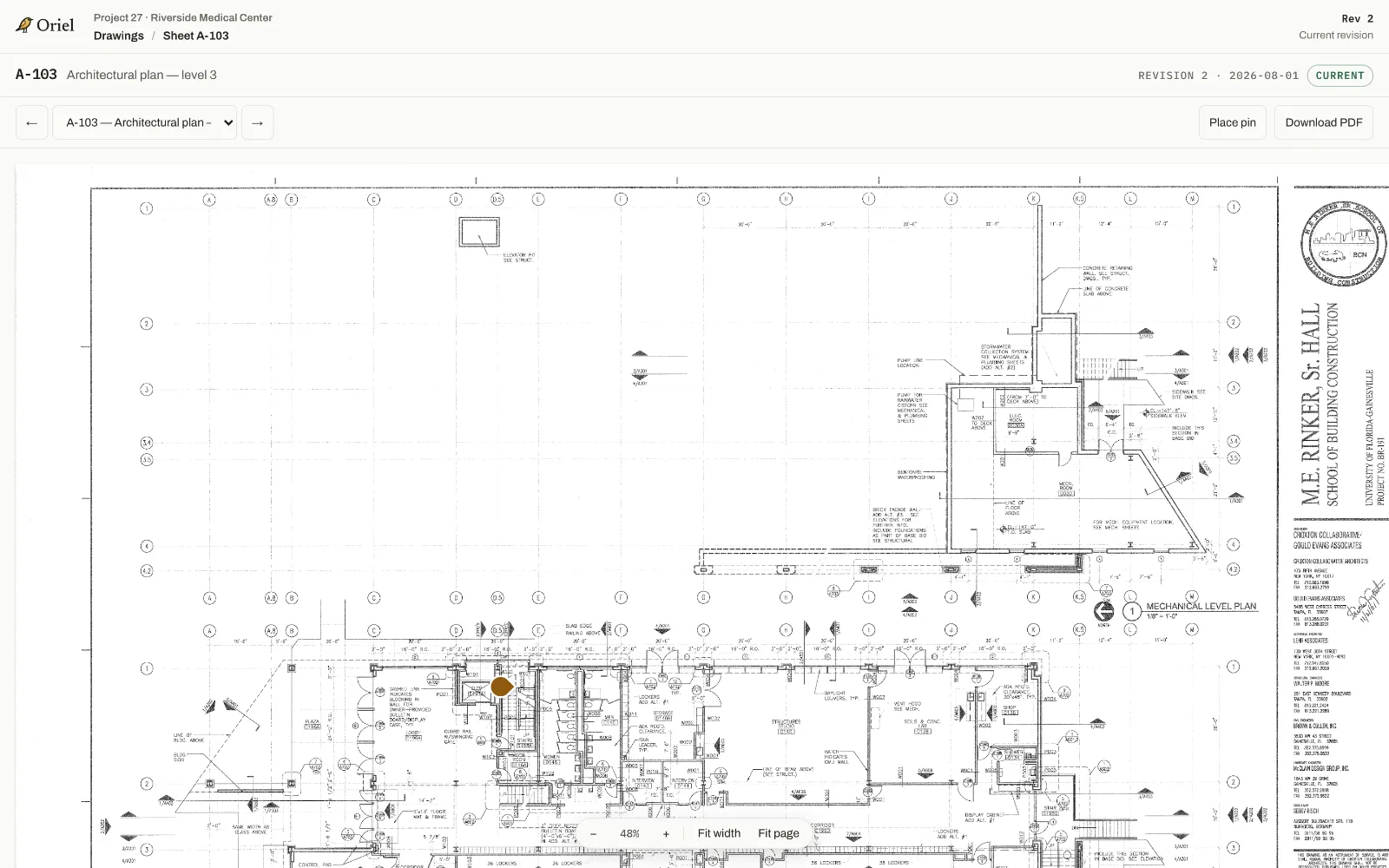
Every question lives pinned to the exact spot on the drawing. The person who owes you the answer gets one link, no account, and their response files itself.
- Pin the question where the problem is
- Answers come back through a link, not a login
- Photos, revisions, and history stay attached
- Nothing overwritten, everything exportable
Median time to get an RFI answered.
Never get an official answer at all.
The cost to process a single one.
Navigant Construction Forum, a 2013 study of 1.1 million RFIs across 1,362 projects.
The life of one question
Three steps. No training.
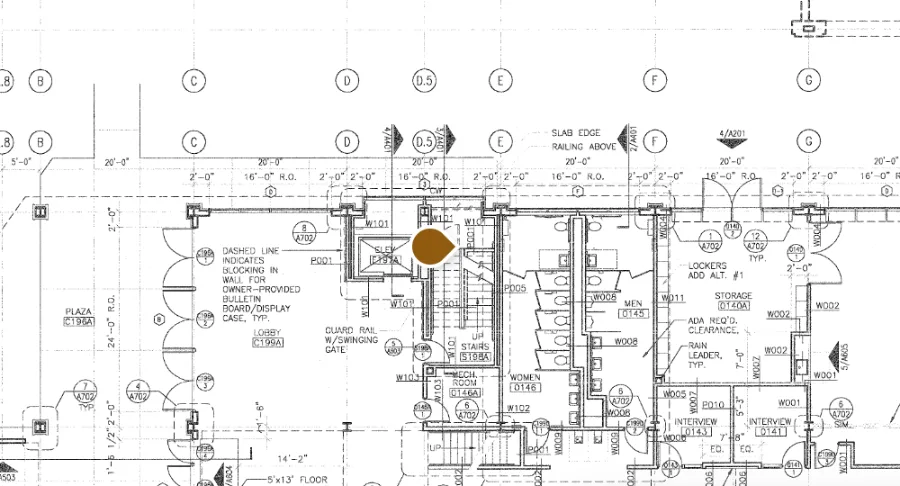
Pin it
Click the spot on the sheet, type the question, attach the photo. Oriel numbers it and starts the clock.
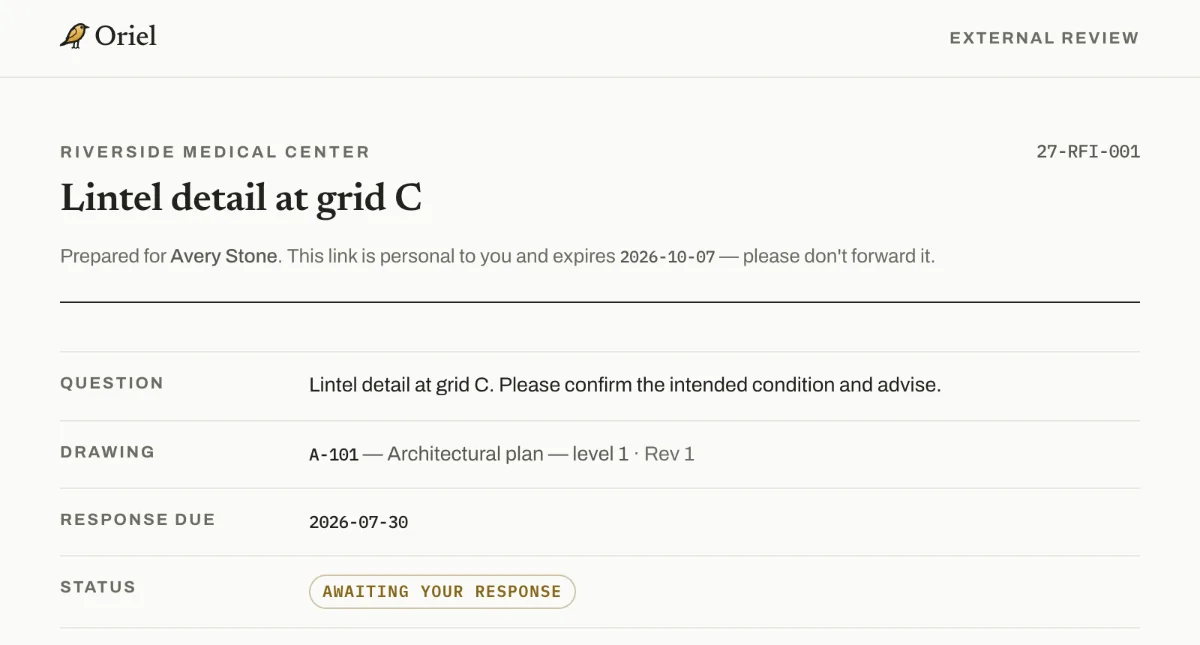
Send one link
The architect opens it in a browser, sees the pin, the sheet, the question and the photos, and answers right there. No account, no download.
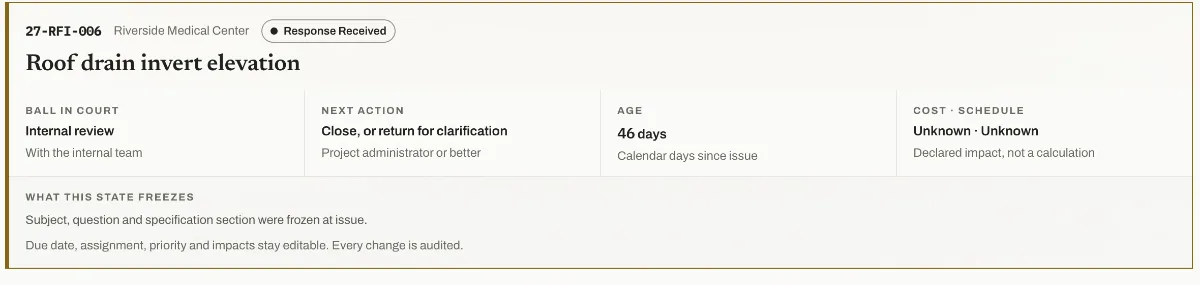
It files itself
The response lands on the pin, word for word. The log updates, the crew is notified, the clock stops. Every step timestamped, nothing editable after the fact.
A record that holds up
Built for the day someone questions it.
Every RFI in Oriel is append-only. Questions, answers, photos, and markups are timestamped and never overwritten.
Supersede a drawing and the old pin stays tied to the revision it was asked against.
The entire log, in one click, in a format a mediator can actually read.
Not locked in someone else's account. Yours.
Please confirm wall type and fire rating at this corridor intersection.
External review
Your architect is never going to log into your software.
Neither is the structural engineer, or the sub's PM. That's why answers die in email today.
Oriel sends a link instead. One click, full context, a reply box. Their answer files itself into your record exactly as they wrote it. Nobody creates an account. Nobody buys a seat. Whoever holds an open item is reminded before it is late, not after.
Straight answers
The questions a skeptic asks first.
They click a link and type an answer. If they can reply to an email, they can answer an Oriel RFI.
No. Nobody outside your team ever creates an account or buys a seat.
In private storage, served only through signed, expiring links. Nothing is ever on a public URL.
Export everything, any time: the log, every response, every attachment, every timestamp.
Upload a drawing set and send your first RFI the same afternoon.
Roadmap
Things you stopped expecting software to do.
A text and a photo to the project number will be enough to start an RFI. The field never opens an app.
An answer marked as changing scope will be held at the gate until a change order is started.
Oriel will run the notice clocks from the dates in your contract and warn you while there is still time.
Search your specs, your sheets, and every question your company has answered before, before the RFI goes out.
Pilot partners get each of these first, and shape what ships. The full roadmap →

Private pilot
We're onboarding a small number of pilot GCs.
Built for the GC doing $10M to $150M whose RFIs live in Outlook. You get Oriel shaped around your live jobs and a direct line to the people building it. Pilots run on real projects, and your data stays yours from day one.